
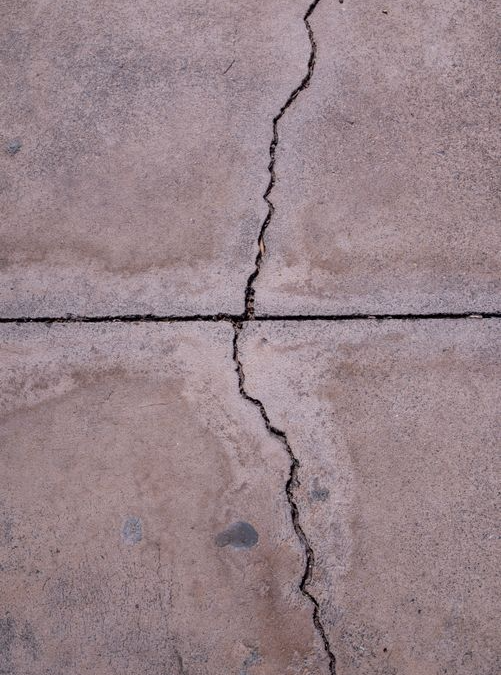
Not every crack in a driveway or parking lot means something went wrong. In many cases, cracking is simply part of how concrete behaves over time. Still, understanding what causes concrete cracks can help property owners in Austin tell the difference between normal wear and a sign that repair is overdue.
Temperature Swings Cause Expansion and Contraction
Central Texas summers push concrete through repeated cycles of heat and cooling. As concrete heats, it expands; as it cools, it contracts. Repeated over months and years, this constant movement puts stress on the slab, and cracks are often the result, especially near joints or edges.
Normal Shrinkage During the Curing Process
As concrete cures, water evaporates from the mix and the slab shrinks slightly. Control joints are designed to guide this shrinkage into planned lines, but if they weren’t spaced correctly during installation, cracking can appear in random areas instead. Research on concrete curing shows shrinkage-related stress is one of the most common causes of cracking in poured slabs.
Tree Roots and Shifting Soil
Much of Central Texas sits on clay-heavy soil that expands and contracts with moisture changes, while nearby tree roots can push upward from below. Both create uneven support beneath a slab, and once the ground shifts, the concrete above it often cracks or moves to match.
Moisture Buildup and Drainage Issues
Water that pools near a slab’s edge or seeps beneath it can wash away the base material supporting the concrete. Over time, sections of the slab lose that support and begin to sink or crack, a pattern that often shows up after heavy rain.
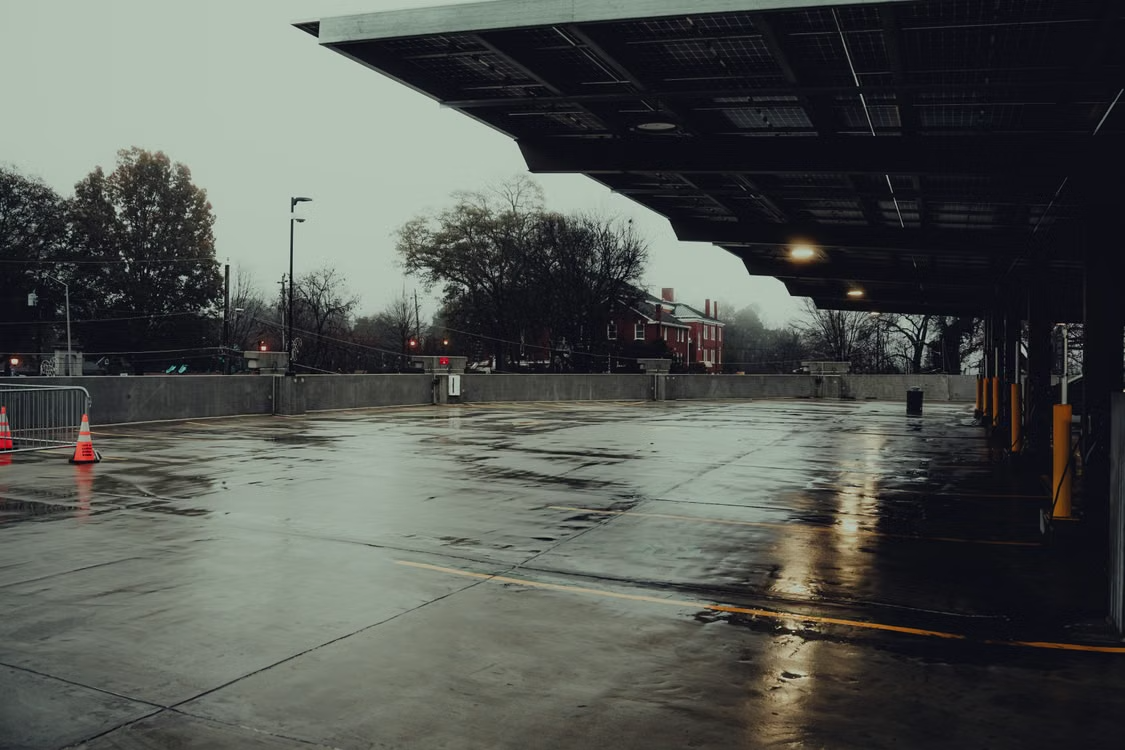
Standing water left on pavement is one reason routine inspections matter for concrete repair in Austin, especially before small issues turn into cracks.
Installation Shortcuts That Show Up Later
Not all cracking is unavoidable. Inadequate base compaction, an incorrect concrete mix, or control joints spaced too far apart can all lead to premature cracking, sometimes within the first year or two after a new pour.
Heavy Loads the Slab Wasn’t Built For
Driveways and parking areas are designed around a specific weight limit. Parking heavy trucks, trailers, or equipment on a surface built for standard vehicles can stress the slab beyond its capacity, leading to cracks along edges and corners.
When It’s Time to Call a Concrete Professional
Thin, hairline cracks are usually cosmetic and don’t require immediate action. Wider cracks, uneven sections, or cracks that keep spreading are signs of a deeper problem that sealant alone won’t fix.
If you’re seeing cracks that concern you, Rock Solid Concrete & Construction provides concrete repair in Austin, backed by more than 25 years of experience serving Central Texas properties. We also offer driveway repair and sidewalk repair in Austin for properties that need more than a simple patch. Our team can inspect the damage, identify why the cracks are forming, and recommend a lasting fix.
Contact us today to schedule an evaluation.